Mass loss in Memory
Nations across the world, facing massive loss of people and land, endure a profound rupture of identity and history, resulting in trauma that echoes across generations. This collection of artworks gives voice to silenced stories and fragmented histories, confronting the overwhelming scale of despair. Through repetition and layering of visual elements, the works evoke the horror of mass disappearance and the erasure of collective memory.
These pieces transform absence into presence, insisting on remembrance and resilience. By bringing these stories forward in tangible forms such as installations, photographs, and paintings, the artists reclaim heritage and create spaces for reflection.
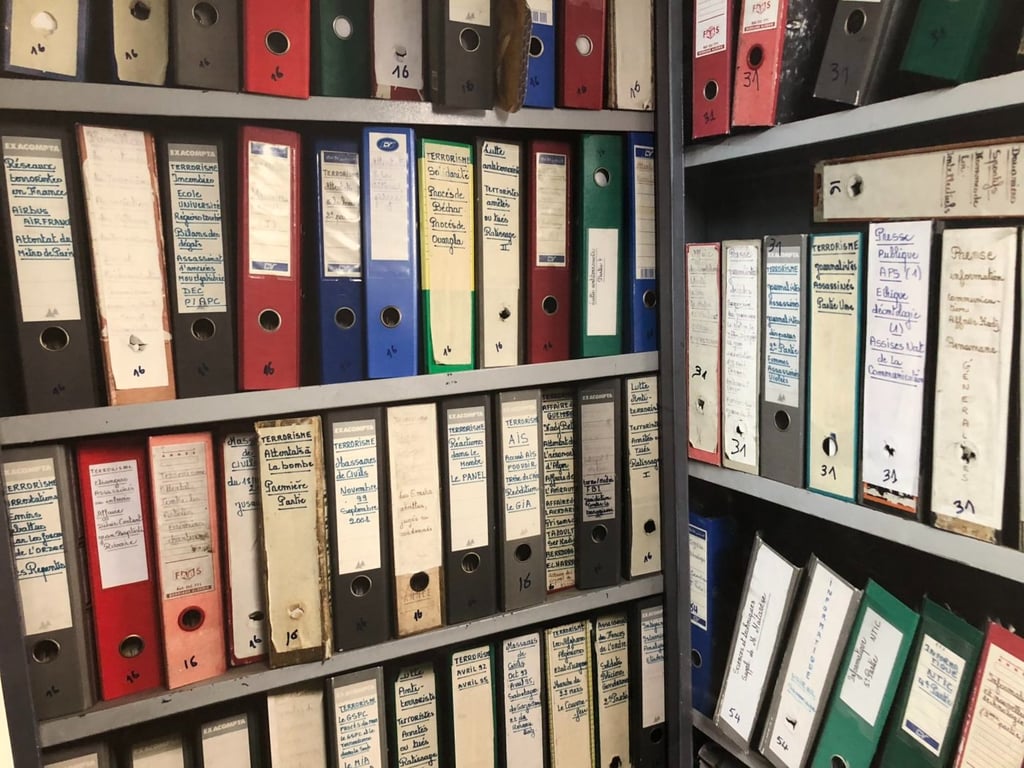
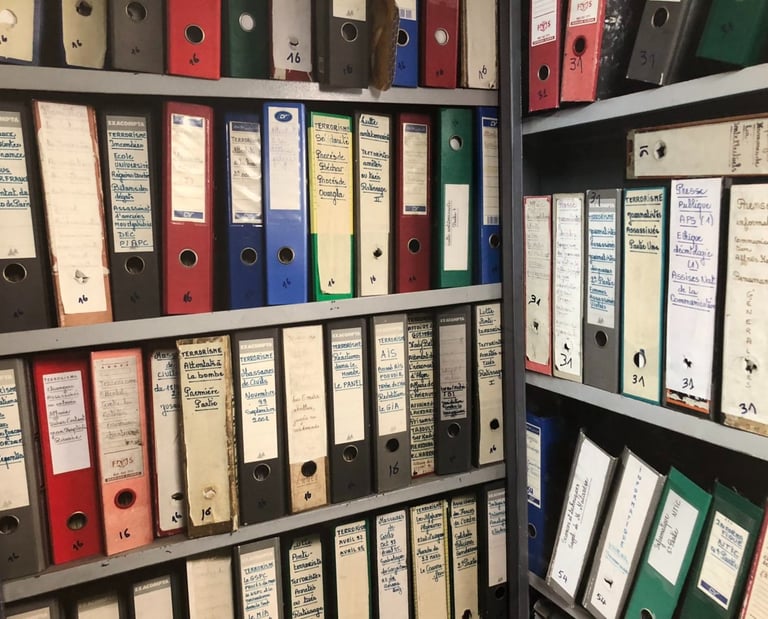
The Forgotten [Condemned] Journalists of Algeria’s Black Decade (2018)
by Zineb Sedira
The artist revived the memory of assassinated journalists through archival imagery arranged in large quantities. The work challenges institutional forms of recording the Algerian Civil War, refusing to allow these individuals to become anonymous numbers. Sedira instead humanizes memory through compassion and emotional proximity. Her approach directly resonates with Linda Tuhiwai Smith’s critique of Western systems of research and classification, which historically transformed colonized people into objects of knowledge through supposedly objective methods (Smith, 2012).
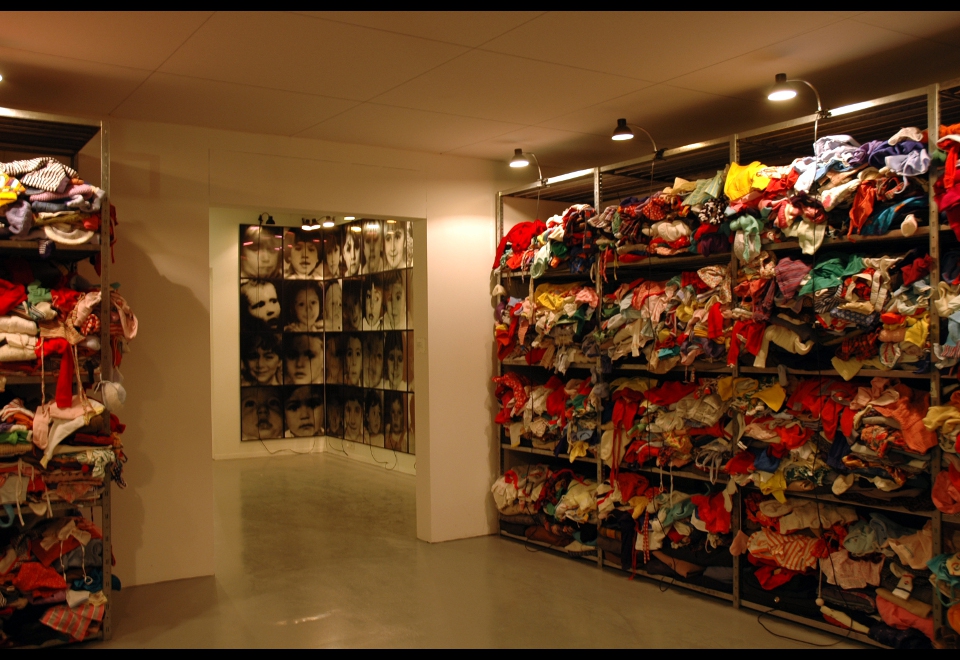
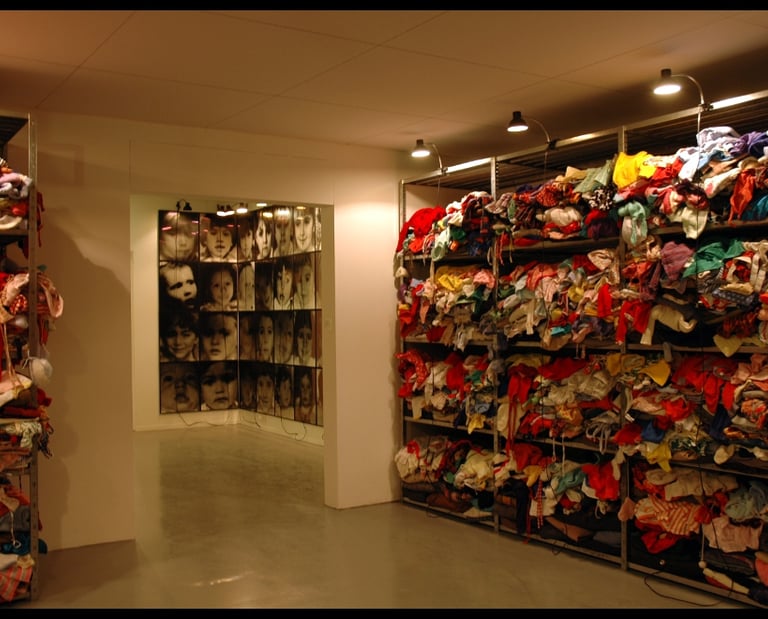
Réserve du Musée des Enfants (1989)
by Christian Boltanski
This strategy of accumulation and repetition also appears in this work. Boltanski uses black-and-white photographs of children alongside piles of abandoned clothes stacked on shelves. The repetition of familiar objects amplifies the scale of mass disappearance without directly depicting violence itself. The materials associated with human presence, appearing in the form of personal belongings, intensify the tragedy because the belongings appear temporarily left behind, as though their owners intended to return but never could. The work aligns with Adam Kuper’s The Museum of Other People, which critiques how museums and institutional archives historically shaped cultural narratives through colonial systems of preservation and classification (Kuper, 2023). Similarly, Amy Lonetree argues in Decolonizing Museums that museums often fail to acknowledge trauma and colonial violence honestly, prioritizing institutional authority over lived experience (Lonetree, 2012).
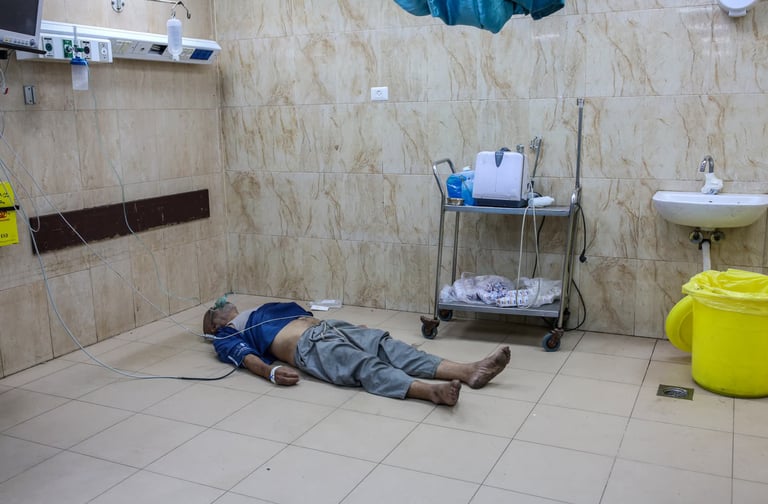
Questions of visibility and perception become even more direct in this photograph. In an era saturated with photojournalism and images of war, creating a photograph that remains both ethically responsible and visually distinct becomes increasingly more challenging. Abu Elouf achieved this through visual minimalism. An image of a wounded man lying on the floor of a hospital attached to medical equipment, yet without the availability of basic care features such as a hospital bed, exposing the collapse of the healthcare system in Gaza. The visual minimalism pulls all attention to one aspect and intensifies how suffering is perceived, to communicate deprivation and abandonment. Carol Gilligan’s ethics of care becomes particularly relevant here, emphasizing attentiveness to vulnerability and relational responsibility rather than detached observation (Gilligan, 1982).
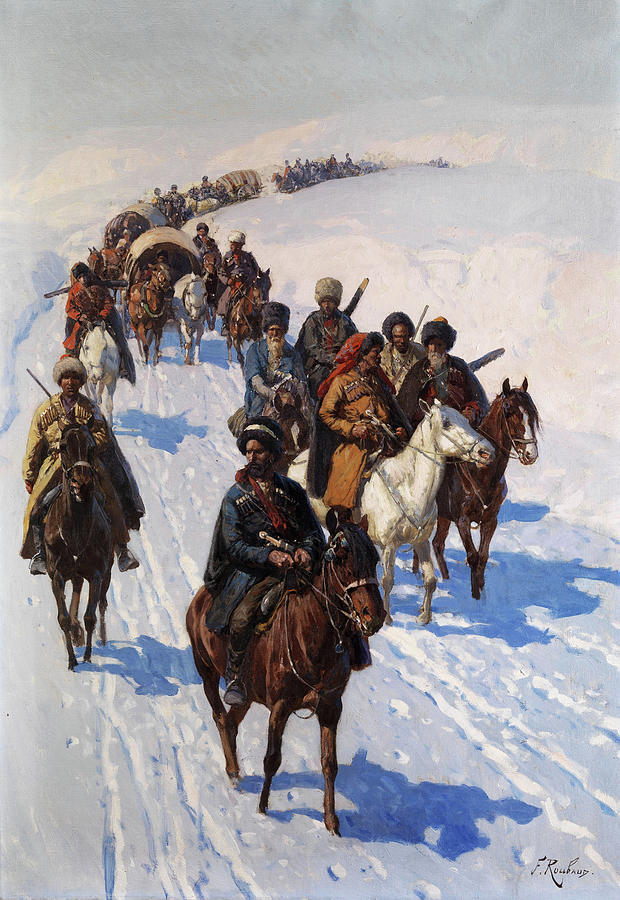
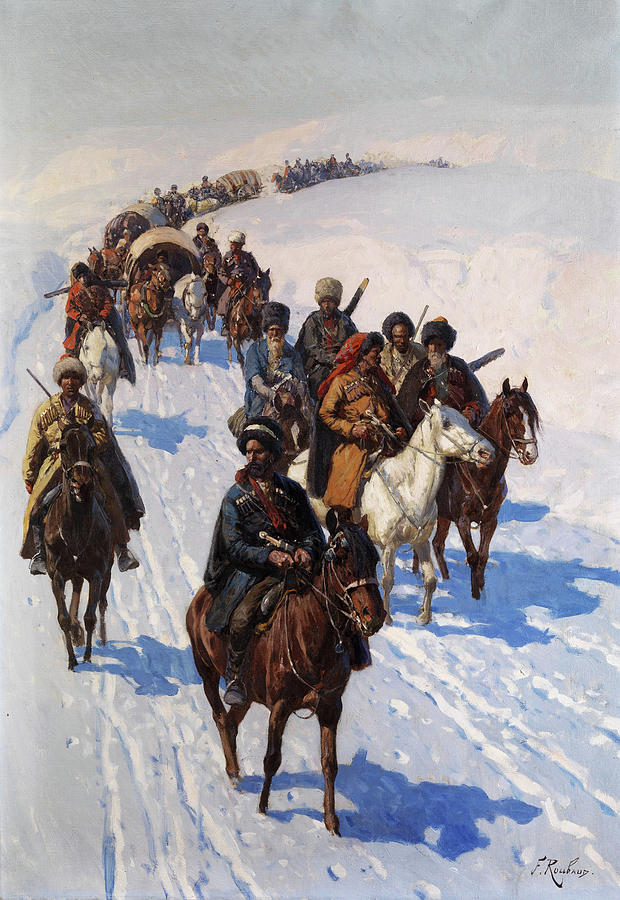
This series of paintings introduces another tension between historical preservation and narrative authority. Executed in a visually realistic style, the painting functions as documentation of Circassian displacement and ethnic cleansing. Yet because Roubaud himself was French, the work arguably reflects an imposed Western gaze. Although the work preserves facts as historical testimony, it is inevitably shaped by interpretation and limitation of perspective, because of the lack of personal or lived experience. Those who did not directly experience catastrophe possess the privilege of narrating it from the perspective of witness rather than survivor. This tension reflects Frantz Fanon’s argument that colonial domination extends beyond territory into systems of consciousness and representation (Fanon, 1961). Representations of historical narratives are therefore never neutral. Abd al-Rahman al-Kawakibi similarly examined how oppressive systems weaken collective agency and suppress historical memory, connecting tyranny to silence and erasure (Al-Kawakibi, 1902).
Crossing by Argutinsky through the Snowy Mountains of the Caucasus in 1853 (1892)
by Franz Roubaud
This is Worth Dying For (2024)
by Samar Abu Elouf
Vision is not a separate experience from memory formation, frames of perception, and emotional attachment of lived experience. In Ibn al-Haytham’s Book of Optics, which demonstrated that vision depends upon light, geometry, and the physical structure of perception itself. Intersecting with Maurice Merleau-Ponty argument in Eye and Mind, that art reveals a truth scientific objectivity overlooks, human beings are simultaneously “seers and visible beings” (Merleau-Ponty, 1964). Together, these theories suggest that seeing is never neutral.
The writings of bell hooks and Angela Davis further deepen this understanding of collective memory as political resistance. hooks emphasizes the importance of care, love, and representation in confronting systems of dehumanization, while Davis argues that freedom struggles are inseparable from memory and collective solidarity (hooks, 2001; Davis, 2016). Similarly, the act of transforming pain into visible work is a form of survival and resistance.
Theoritical Frameworks
Al-Kawakibi, A. (1902). The Nature of Tyranny and the Devastation of Slavery.
Davis, A. (2016). Freedom Is a Constant Struggle. Haymarket Books.
Fanon, F. (1961). The Wretched of the Earth. Grove Press.
Gilligan, C. (1982). In a Different Voice: Psychological Theory and Women’s Development. Harvard University Press.
hooks, b. (2001). All About Love. William Morrow.
Ibn al-Haytham. Book of Optics.
Kuper, A. (2023). The Museum of Other People. Profile Books.
Lonetree, A. (2012). Decolonizing Museums. University of North Carolina Press.
Merleau-Ponty, M. (1964). Eye and Mind. Northwestern University Press.
Smith, L. T. (2012). Decolonizing Methodologies: Research and Indigenous Peoples. Zed Books.
References
©Afterimage by Farah