Decolonizing Indigenous Identities
Decolonizing indigenous identity is a visual practice of resistance that goes beyond just theory. It is a deliberate effort to confront and reframe colonial narratives that have historically categorized or even erased indigenous presence. By using personal storytelling, symbolism, and specific visual theories, artists are able to reclaim their cultural agency and authorship. This project focuses on how visual storytelling acts as a political intervention, allowing creators to assert self-determined perspectives.
This shift in perspective is vital because it moves the power of definition away from the colonizer and back into the hands of the indigenous people.
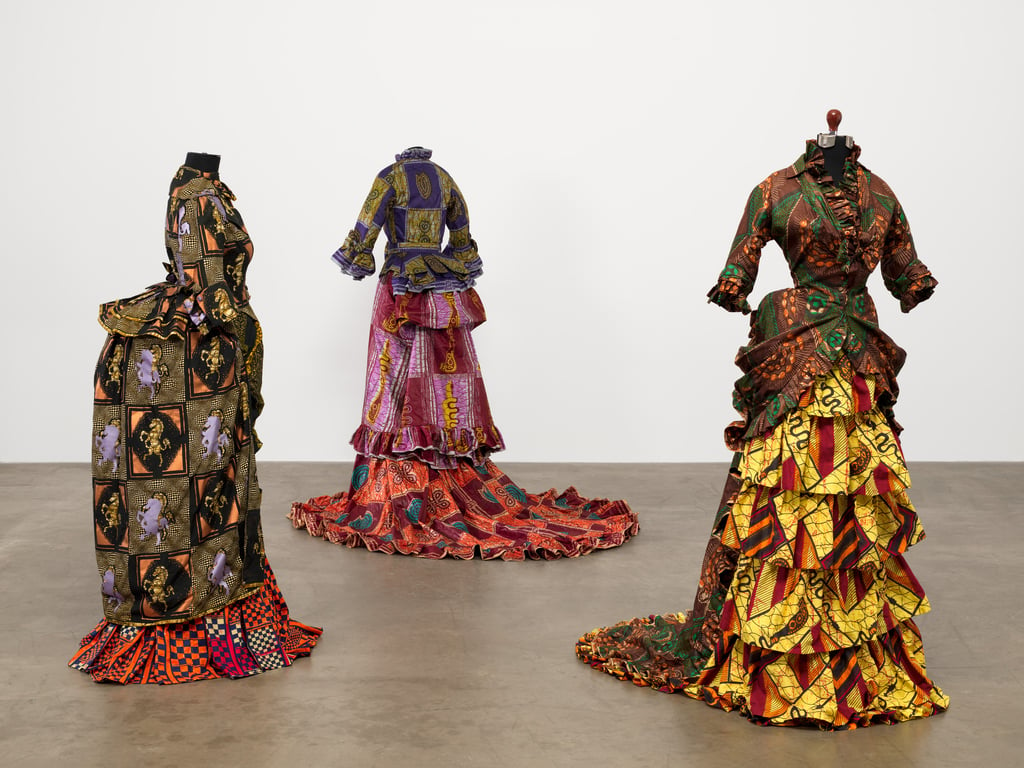
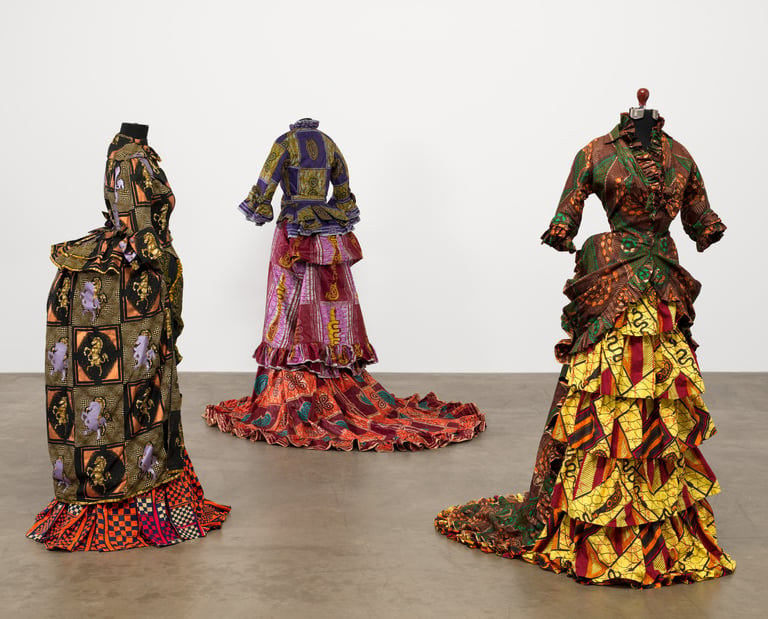
How Does a Girl Like You Get to Be a Girl Like You? (1995)
by Yinka Shonibare
Reconstructing the imperial narrative through Yinka Shonibare’s practice as an example of "visual hybridity". Using Dutch wax fabrics is a clever way to explore the complex history of global trade and identity. While these textiles are often seen as "authentically" African, they were actually Indonesian-inspired designs produced by European powers for West African markets (Mehmood & Malik, 2026). By presenting figures without heads, the work rejects a fixed or essentialist identity, forcing the audience to focus on the costumes as the main storytellers (Arohunmolase & Oladepo-Ajagbe, 2025). This approach renders traditional signs of colonial authority powerless by dressing colonizers' silhouettes in these vibrant local colors (Mehmood & Malik, 2026). It visually represents a shift in power from the colonizer to the colonized, reclaiming cultural agency through the very materials used to control them.
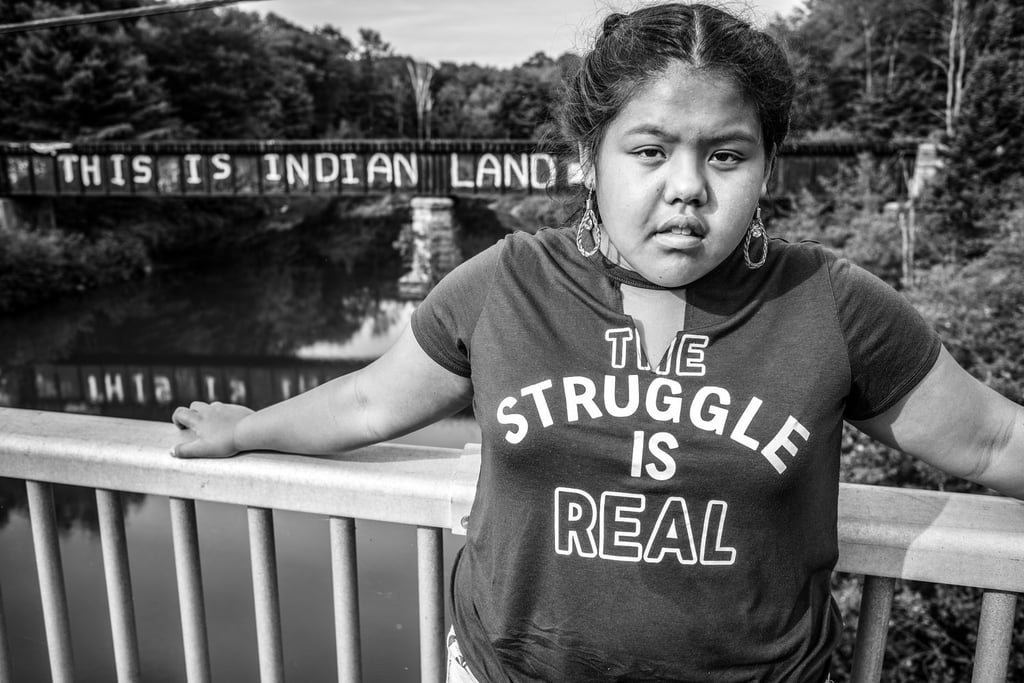
This is Indian Land (2019)
by Stan Williams
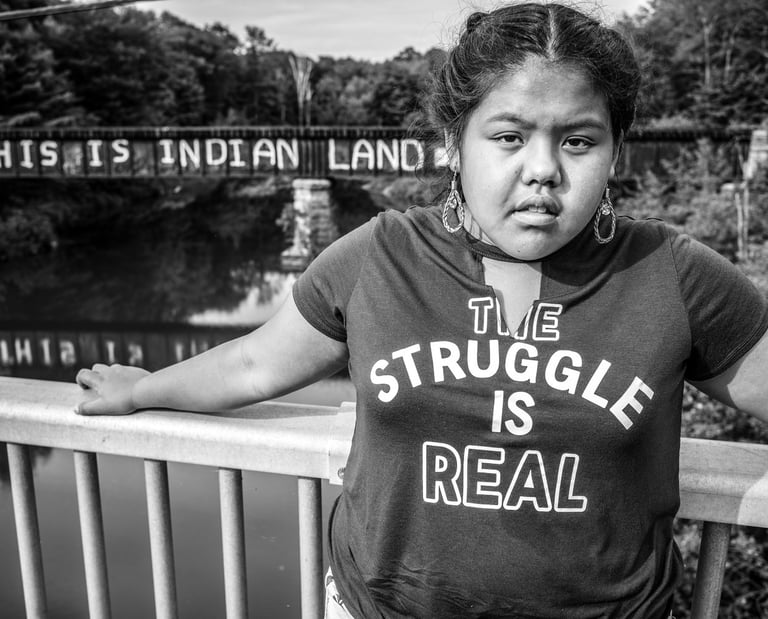
Photography can be used to bring forward a revocation of colonialism by focusing on three key visual points. The girl’s face, carrying the features of her native culture, contrasts sharply with the "the struggle is real" message on her shirt. When combined with the text on the bridge in the background stating "this is Indian land," the photograph tells a complete story of the Wet'suwet'en Nation’s defense of their unceded territory (Photographers Without Borders, 2019). This direct visual message reclaims the land and asserts a perspective that is entirely self-determined. It uses the power of the gaze to make a political statement about ownership and resistance that cannot be ignored.
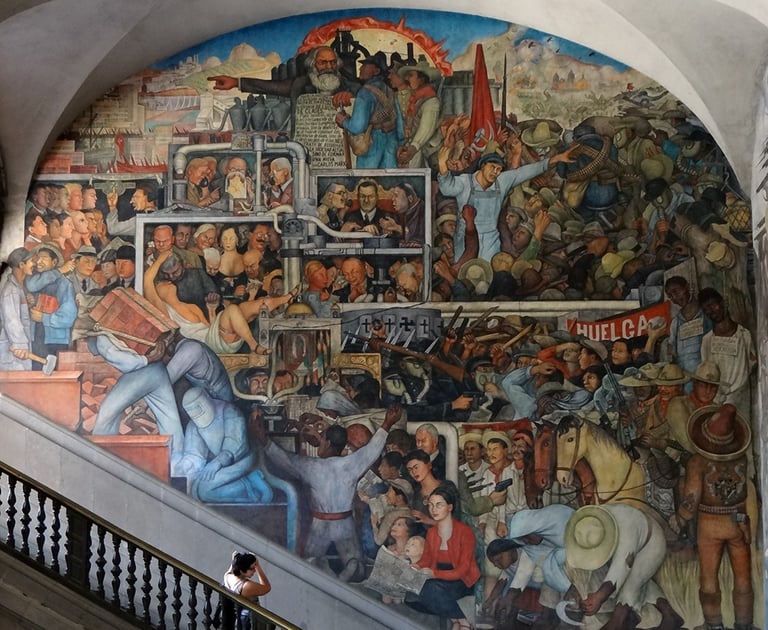
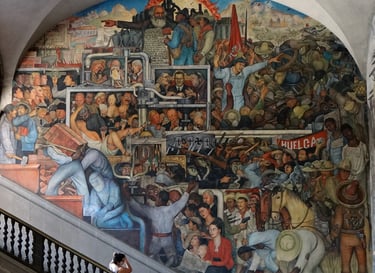
Recording history from a native perspective is a direct way to address the political and social whirlpools caused by colonization. These murals do not just decorate a space; they act as a visual record of a nation’s history seen through the eyes of its own people. By focusing on the economic and social struggles of the masses, the art challenges the narratives written by those in power. This practice turns the wall into a site of political intervention, asserting that history belongs to the people who lived it. It is a form of curatorial resistance that ensures indigenous presence remains at the center of the national story, both in the past and for the future.
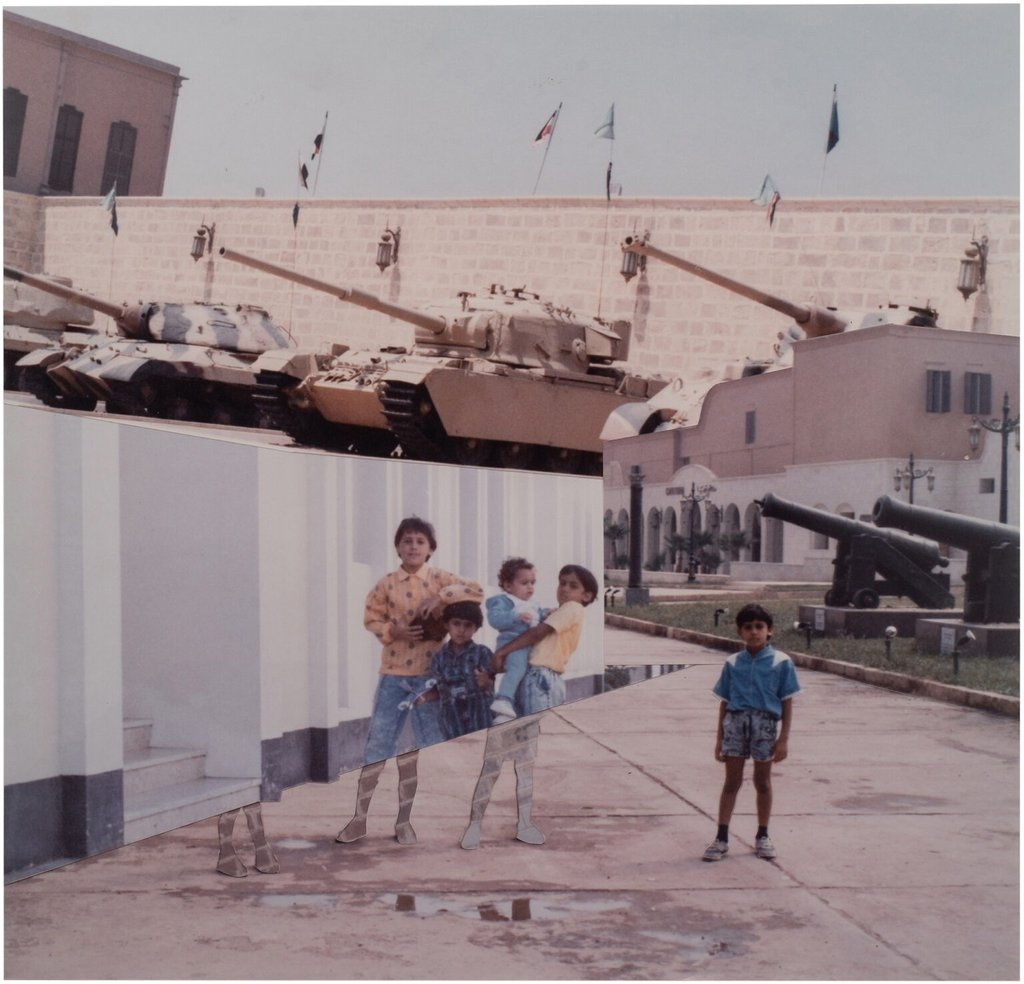
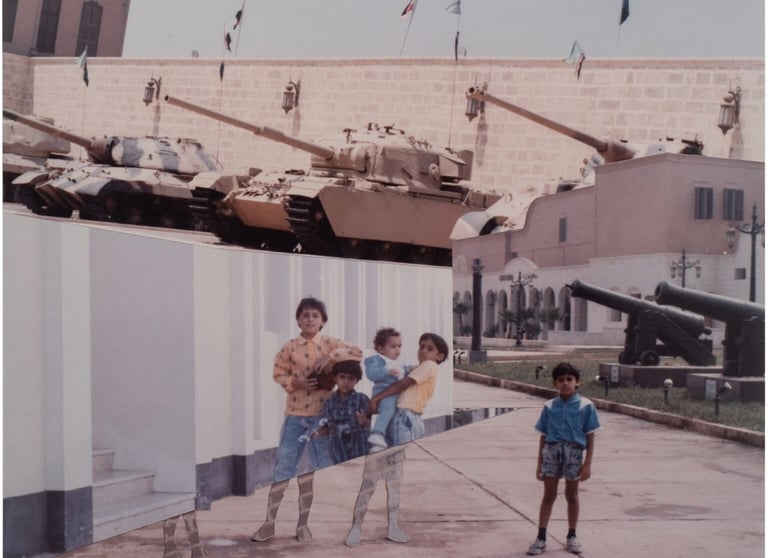
The use of a collage style with sharp, unblended edges creates a powerful emotional reflection on migration. Instead of a simple, linear story, the merging of different times and places forces the viewer to confront a fragmented reality. There is a striking contrast between the images of children and the heavy military machinery, which creates an immediate sense of danger and anxiety. By drawing on personal history, the work asserts a self-determined perspective that rejects outsiders' views on displacement. This visual technique allows the artist to intervene in the political discourse surrounding borders, turning personal trauma into a collective statement of resistance against colonial boundaries.
Quickly but carefully cross to the other side (2020)
by Ibrahim Ahmad
Mexico Today and Tomorrow – History of Mexico murals (1933)
by Diego Rivera
Decolonizing is the process of breaking away from the narratives imposed by outside powers. Western narratives create whirlpools of confusion and misrepresentation that trap indigenous identities in the past or in harmful stereotypes. Visual artistic expression is the primary way to escape these whirlpools. This shift is achieved when artists use their own gaze to define themselves instead of being defined by a colonizer. By choosing their own symbols and storytelling methods, they reclaim their authorship and their land. Visual art allows for this reclamation because it makes these claims visible and permanent. It moves identity from a theoretical idea to a physical practice of resistance. When an artist controls the image, they control the truth of their own experience. This allows for a self-determined perspective that finally silences the colonial tyranny of the past. Through this shift, the artist is no longer a subject being studied but an author with total agency.
Theoritical Frameworks
Arohunmolase, O., & Oladepo-Ajagbe, A. (2025). Visual Storytelling and Dutch Wax Fabrics.
Mehmood, S., & Malik, T. (2026). Semiotics of Colonial Power in Contemporary Art.
Photographers Without Borders. (2019). This is Indian Land: Defending Wet'suwet'en Territory.
Smith, L. T. (2012). Decolonizing Methodologies: Research and Indigenous Peoples. (General theory on decolonizing perspectives).
Tintera Gallery. (2020). Ibrahim Ahmed: Quickly but Carefully Cross to the Other Side.
MoMA. (1995). Yinka Shonibare: Postcolonialism and Fabric.
References
©Afterimage by Farah